
Cook County Truck Accident Attorney
Cook County is our home venue — the Daley Center, the Law Division, the Illinois appellate opinions that frame how truck cases are tried in Illinois. For a plaintiff with catastrophic injuries, the combination of an experienced bench, an urban jury pool, and the established case-law framework make Cook County among the most favorable trucking venues in the country.
Available 24/7 · No fee unless we win · Licensed in Illinois
Why does Cook County matter for commercial truck accident cases?
Cook County combines an experienced bench, a favorable jury pool, and a mature case-law framework for commercial-trucking litigation. Law Division judges at the Daley Center have managed hundreds of multi-defendant truck cases, and Illinois appellate decisions from Cook County have built the procedural and substantive rules that shape trucking litigation statewide. For plaintiffs with serious injuries, Cook County is the venue the biggest carriers and their insurers most want to avoid — which matters at every negotiation.Why is Cook County considered a favorable plaintiff venue?
Cook County Law Division has historically produced larger verdicts than collar-county courts in commercial-trucking cases. The jury pool is urban and diverse; the bench has deep experience with complex civil litigation; the defense bar recognizes the venue’s plaintiff-favorable dynamics when evaluating settlement offers. Cases that might settle in the $500K range elsewhere routinely reach seven or eight figures with full trial preparation.What are the Cook County Law Division's case-management rules?
Cook County Law Division operates under Circuit Court General Order 2.1: mandatory pretrial conferences, expedited discovery calendars for cases exceeding $50,000, and specific trial-readiness requirements. The Mandatory Arbitration Program applies to cases under $50,000. Trial dates are typically set 12-18 months out; summary-judgment deadlines run 60 days before trial. Judicial assignment follows the Law Division wheel.What is the Daley Center and how does venue work?
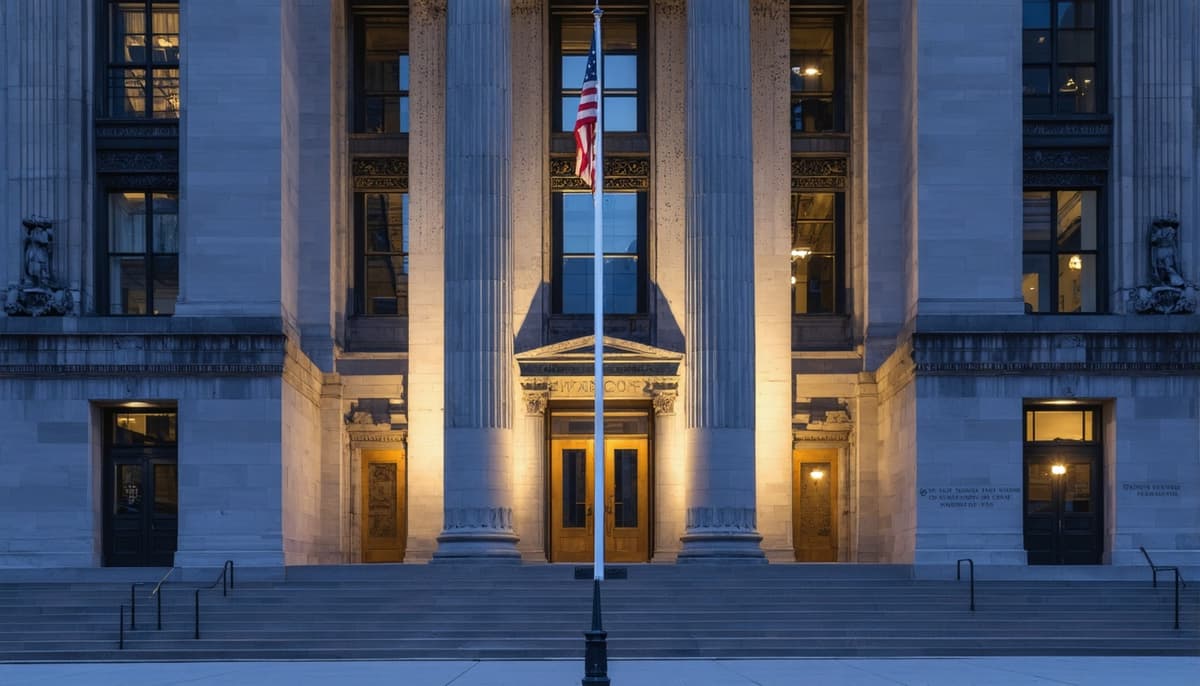
The Richard J. Daley Center at 50 W Washington houses the Cook County Law Division where most commercial-trucking civil cases are tried. Venue in Illinois is proper in any county where (a) any defendant resides, (b) the cause of action occurred, or (c) the transaction arose. For Chicago truck crashes, resident-defendant venue and accident-site venue usually both land in Cook County — carriers sometimes attempt transfer.The Circuit Court of Cook County
The Circuit Court of Cook County is the largest unified trial court in the United States, with more than 400 judges and a caseload measured in the hundreds of thousands annually. For commercial-truck cases, the relevant divisions are the Law Division (damages exceeding $100,000, at the Daley Center) and the Probate Division (for appointment of the decedent’s personal representative in wrongful-death cases).
The Law Division operates under an individual-calendar system — a single judge manages the case from filing through trial, which creates continuity and makes litigation strategy more stable than in jurisdictions where cases rotate among judges for different phases.
Where the Crashes Happen
- Expressway corridors — Dan Ryan (I-90/94), Kennedy (I-90), Eisenhower (I-290), Stevenson (I-55), Bishop Ford (I-94), Edens (I-94), and the Tri-State Tollway (I-294) account for the majority of serious Cook County truck crashes.
- Surface arterials — Cicero, Pulaski, Cermak, 63rd Street, and other industrial-corridor arterials concentrate box-truck, delivery-van, and short-haul freight traffic.
- Warehousing and logistics concentrations — the Midway-area industrial corridor, the Stevenson corridor, and the South Side industrial belt generate significant short-haul freight volume.
- Construction zones — active construction on Cook County expressways brings additional defendants into every crash investigation.
- Downtown delivery routes — box trucks and delivery vehicles navigating the Loop’s narrow streets, frequent curbside stops, and pedestrian density.
Jury-Pool Dynamics & Case Value
Cook County’s jury pool is among the most diverse in the United States, reflecting the demographic profile of the Chicago metro. Juries drawn from this pool are generally familiar with commercial-trucking operations, the role of insurance in serious injury cases, and the kinds of medical care that catastrophic injuries require. Combined with an experienced defense and plaintiff bar, the Cook County venue consistently produces verdict and settlement values that reflect the true economic and non-economic impact of serious truck crashes. This matters in negotiation — insurance carriers value cases differently when the alternative is a Cook County trial.
Multi-Defendant Coordination
Serious Cook County truck cases almost always have multiple defendants — the driver, the motor carrier, the trailer owner, the shipper, the broker, and often maintenance contractors or component manufacturers. Each has its own counsel, its own insurance carrier, and its own litigation strategy. Cook County’s individual-calendar system and experienced Law Division judges are well equipped to coordinate multi-party discovery, set realistic trial dates, and resolve contribution disputes under the Illinois Joint Tortfeasor Contribution Act (740 ILCS 100).
Municipal & Government-Entity Defendants
Cases involving government-entity defendants — the Illinois Department of Transportation, the Illinois State Toll Highway Authority, the City of Chicago, Cook County itself — require specific procedural attention. Notice deadlines under the Illinois Court of Claims Act and the Local Governmental and Governmental Employees Tort Immunity Act (745 ILCS 10) are strict and frequently much shorter than the two-year statute of limitations. We identify potential government-entity defendants at intake, preserve notice deadlines, and structure the case to handle parallel federal/state/county jurisdictional issues where they arise.
How We Build Cook County Cases
The Daley Center is a 10-minute walk from our office at 1132 South Wabash. We have tried cases in front of most of the Law Division bench and we know the local defense bar. Our opening sequence on any Cook County case follows the standard truck-case workflow — spoliation letters, ECM/ELD preservation, FMCSA SAFER pulls, accident reconstruction — combined with early consideration of venue, joinder, and contribution-claim strategy.
Most Cook County cases trace back to familiar crash causes — driver fatigue, defective brakes, or improper loading — and produce the familiar catastrophic outcomes: traumatic brain injury, spinal cord injury, and wrongful death. Call Zayed Law Offices for a free consultation. No fee unless we recover for you.
Frequently Asked Questions
Questions about Cook County truck accident cases and Circuit Court of Cook County Law Division practice.
Three factors. The jury pool is urban, diverse, and familiar with commercial-trucking litigation. The bench has deep experience managing complex multi-defendant truck cases and has consistently applied Illinois negligence-per-se principles to FMCSR violations. And the case-law history — appellate decisions out of Cook County over the last two decades — has produced a mature framework for handling hours-of-service, cargo-securement, and carrier-vicarious-liability claims. For plaintiffs with serious injuries and competent counsel, Cook County is the venue most trucking defendants least want to try.
Personal injury cases with damages exceeding $100,000 are filed in the Circuit Court of Cook County, Law Division, at the Richard J. Daley Center (50 West Washington). Cases seeking less than $100,000 are filed in the Municipal Department. Wrongful death cases and complex multi-defendant cases are typically assigned to the Law Division’s individual-calendar system, where a single judge manages the case from filing through trial.
The Dan Ryan (I-90/94), Kennedy (I-90), Eisenhower (I-290), Stevenson (I-55), and the Tri-State Tollway (I-294) account for the highest volume of serious Cook County truck crashes. South- and west-side industrial corridors — 63rd Street, Cicero Avenue, Pulaski, Cermak, and the warehousing concentrations near Midway and the Stevenson industrial corridor — contribute surface-street crashes involving box trucks, delivery vehicles, and short-haul freight.
Cook County venue is proper when the defendant resides in the county, transacts business there, or the cause of action arose there. For truck cases against interstate motor carriers, "transacting business" is interpreted broadly — a carrier that regularly picks up or delivers freight in Cook County will generally be subject to venue there. Venue disputes do arise in cases where the carrier has minimal Illinois contacts, but they are resolved at an early stage of the case.
Illinois’s two-year statute of limitations applies (735 ILCS 5/13-202 for personal injury, 740 ILCS 180 for wrongful death). If a state or municipal government entity is a defendant — for example when road design, signage, or maintenance contributed to the crash — shorter notice deadlines may apply under the Illinois Court of Claims Act or local government tort immunity provisions. We identify government-entity exposure at intake so notice deadlines are preserved.
Keep exploring the library.
Get your free case evaluation today
Were you or a loved one injured in a crash involving a commercial truck in the Chicago area? Get a free, confidential case evaluation.
Find Us
Chicago Truck Accident Lawyers1132 S Wabash Ave, Suite 303
Chicago, IL 60605-2305
Call 24/7312.728.2989
Get Directions