
Chicago Improper Cargo Loading Truck Accident Attorney
An 80,000-pound truck is only as stable as the weight distribution on its trailer. Shifted freight, overweight axles, and missing tie-downs turn ordinary interstate driving into catastrophe — and under the Savage doctrine, the shipper who loaded the truck can end up in the case alongside the carrier.
Available 24/7 · No fee unless we win · Licensed in Illinois
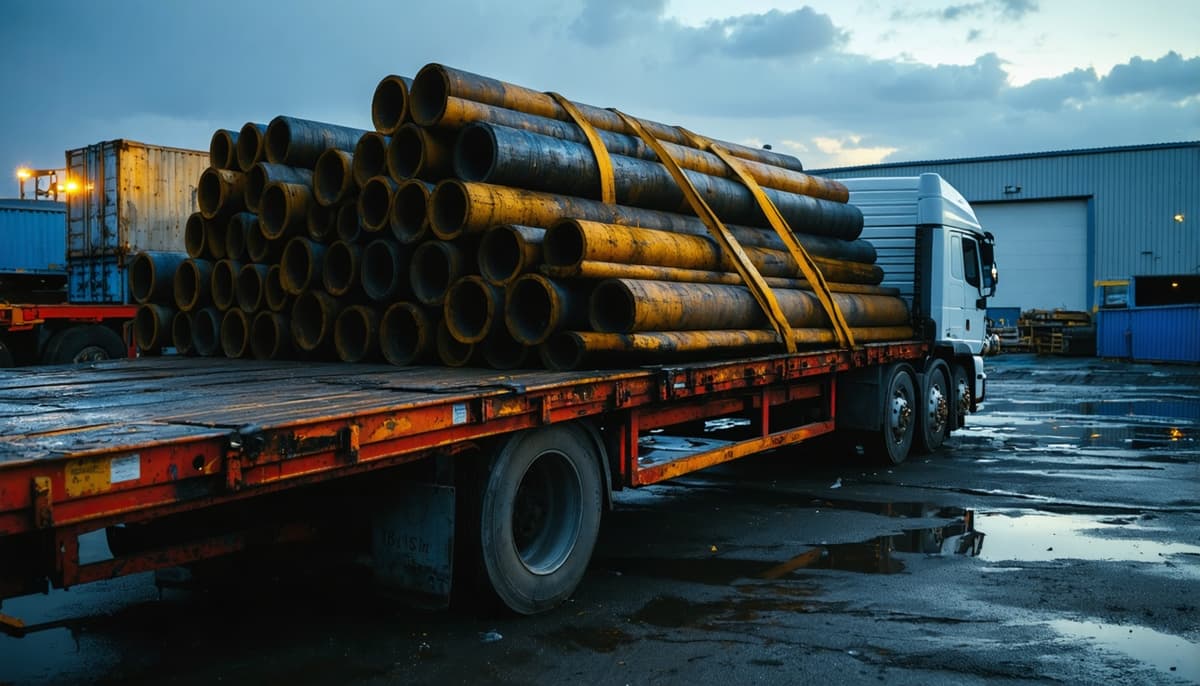
How does improper cargo loading cause commercial truck accidents?
Improperly loaded freight moves. On a truck traveling 65 mph, even a small weight shift — a coil of steel rolling a foot, a pallet tipping against the trailer wall — changes the center of gravity enough to destabilize the rig. The consequence is rollover, jackknife, or lost-load debris in adjacent lanes. Federal cargo-securement regulations (49 CFR §§ 393.100–393.136) are the legal standard, and violations are evidence of negligence per se.What is the Savage doctrine?
The Savage doctrine holds that a freight shipper who loads cargo onto a truck is liable for injuries caused by improperly loaded or secured freight, even if the shipper does not operate the truck. Illinois courts apply a similar analysis: when loading defects are latent — not visible to the driver on pre-trip inspection — the shipper becomes a named defendant alongside the carrier, with separate insurance.What weight limits apply to Illinois commercial trucks?
Federal limits under 49 CFR § 658.17 cap commercial trucks at 80,000 pounds gross vehicle weight on interstate highways, with axle-group limits of 20,000 pounds on single axles and 34,000 pounds on tandem axles. 625 ILCS 5/15-111 mirrors these limits. Overweight violations create both regulatory penalties and civil liability exposure — especially when combined with rollover or brake-failure crashes.How is cargo securement regulated?
49 CFR Part 393, Subpart I establishes the Cargo Securement Rules: minimum working-load-limit requirements, tiedown counts based on cargo length and weight, and commodity-specific rules for logs, lumber, heavy equipment, metal coils, and concrete pipe. Violations make the load itself evidence of negligence. We document failures through scene photos, commodity-specific expert testimony, and the carrier’s training records.Why Loading Failures Are So Destructive
Commercial trucks are engineered for a specific weight distribution. Federal and state laws limit axle weights to protect road surfaces and preserve the physics of safe operation — a steer axle at 12,000 pounds, drive tandems at 34,000 pounds, and trailer tandems at 34,000 pounds, for an 80,000-pound gross-combination limit on most interstate configurations. When a load exceeds those limits, or when weight shifts during transit, the truck’s handling changes fundamentally.
The physics that make a shifted or overweight load so dangerous are the same physics that make any truck crash catastrophic — high mass, elevated center of gravity, long stopping distances, and limited margin for error on Chicago’s interchange ramps and expressway merges. The difference is that a loading failure is almost always preventable by someone other than the driver, and that someone is usually identifiable through records that exist before the trip ever starts.
Federal Cargo-Securement Standards
The FMCSR cargo-securement rules are among the most detailed regulations in commercial trucking. Key provisions include:
- 49 CFR § 392.9 — driver pre-trip and en-route securement inspection requirements, including securement re-inspection at specified intervals.
- 49 CFR §§ 393.100–393.114 — general cargo-securement standards, including working-load-limit calculations, number of tie-downs required for a given length and weight, and general blocking/bracing requirements.
- 49 CFR §§ 393.116–393.136 — commodity-specific standards for logs, lumber, metal coils, concrete pipe, intermodal containers, automobiles, heavy equipment, and other specialized freight.
- Bridge formula / axle-weight limits — federal and state weight-distribution rules that cap loads on specific axle groupings.
Violations of these rules, documented in a roadside inspection or reconstructed post-crash, are the foundation of a negligence-per-se case.
The Savage Doctrine & Shipper Liability
United States v. Savage Truck Line, Inc. established the rule that when a shipper loads its own freight, and the loading defect is latent — meaning it is not visible or reasonably discoverable on the driver’s ordinary inspection — the shipper bears responsibility for resulting injuries. The doctrine is particularly important in cases involving:
- Sealed containers and intermodal shipments that the driver cannot open to inspect.
- Bulk industrial freight — steel coils, chemical drums, heavy machinery — where internal securement is done by the shipper’s own employees.
- Loads whose weight distribution is represented on the bill of lading and cannot be independently verified by the driver without unloading.
The Savage doctrine is what turns a single-defendant case against the carrier into a multi-defendant case against the shipper, the loader, and the broker who assembled the shipment. For a serious catastrophic-injury case, the difference is often measured in tens of millions of dollars of available insurance coverage.
Common Loading-Failure Crash Types
- Rollovers — shifted loads on highway ramps, especially Chicago’s cloverleaf interchanges on I-90/94 and I-290.
- Jackknife — sudden weight transfer destabilizes the trailer, swinging it across lanes during hard braking.
- Falling-cargo incidents — unsecured flatbed freight falls onto adjacent traffic, a particularly common cause of catastrophic and wrongful-death claims.
- Tire and wheel-end failures — overweight axles accelerate tire wear and heat buildup, producing sudden blowouts.
- Loss of steering control — weight shifted off the steer axle reduces traction and produces drift or wandering at highway speed.
Evidence That Proves the Loading Chain
A complete loading-defect case reconstructs every hand that touched the freight before it fell:
- Bills of lading — identify the shipper, consignee, freight description, weight, and broker.
- Loading-dock surveillance video — frequently overwritten within days; needs immediate preservation.
- Loader training records and protocols — the shipper’s or carrier’s own documentation of how this type of cargo should be loaded.
- Weigh-station crossings — state DOT records showing axle-weight measurements before the crash.
- Post-crash photographs and physical evidence — tie-down hardware, dunnage, and the cargo itself in its post-crash configuration.
- Driver DVIR and pre-trip records — show whether the driver noted any securement concern at the time of departure.
How We Build Loading-Defect Cases
Our opening sequence is the same every time. Spoliation letters to the carrier, the shipper, the broker, the loading facility, and any rigger or contractor involved in freight preparation. Immediate subpoena of bills of lading, dispatch records, and surveillance video. Physical preservation of the cargo and tie-down hardware. Retention of a cargo-securement expert — frequently a retired CDL trainer or professional rigger — to reconstruct the standard-of-care failure.
The cases most often involve catastrophic injuries because of the crash dynamics — see traumatic brain injury, spinal cord injury, and wrongful death. We work on contingency and take no fee unless we recover for you. If freight fell from a truck, shifted in a trailer, or overloaded an axle and caused your crash, call Zayed Law Offices for a free consultation.
Frequently Asked Questions
Questions about cargo-securement and improper-loading truck crashes across Chicago and Illinois.
All three, in different ways. Federal regulations (49 CFR § 392.9) require the driver to inspect and ensure load securement before operating. The motor carrier is responsible for training and for the loading equipment under its control. The shipper — the entity that owned and loaded the cargo before the carrier picked it up — faces liability under the Savage doctrine when loading defects were latent and not reasonably discoverable on inspection. A serious loading case frequently has all three as defendants.
The Savage doctrine — named for the federal case United States v. Savage Truck Line, Inc. — holds that when a shipper loads its own cargo and the loading defect is latent (not visible on reasonable inspection), the shipper is liable for resulting injuries even though the driver had a general duty to verify securement. Illinois courts have adopted Savage principles for in-state cases. It is the doctrine that turns an improper-loading case from a single-defendant claim against the carrier into a multi-defendant case with multiple insurance policies.
Federal cargo-securement rules are codified at 49 CFR §§ 393.100 through 393.136 and the accompanying load-specific standards. They require cargo to be blocked, braced, or otherwise secured so it cannot shift, fall, or spill under normal driving or emergency maneuvers. Specific rules cover logs, lumber, metal coils, concrete pipe, intermodal containers, automobiles, heavy equipment, and flatbed loads. Each type of cargo has its own required tie-downs, working-load-limit minimums, and inspection intervals.
Shifted loads change the truck’s center of gravity and can cause rollovers on highway ramps, jackknifes when the trailer swings out, and loss of steering control when weight transfers off the steer axle. Unsecured flatbed cargo — steel coils, pipe, lumber, construction equipment — can fall onto adjacent traffic lanes with catastrophic consequences. Overweight axles accelerate brake wear and tire failure, turning what should be manageable defects into sudden crashes.
Illinois’s two-year statute of limitations for personal injury applies (735 ILCS 5/13-202). But cargo-securement evidence is among the most perishable in a truck case — load photographs, tie-down hardware, dunnage, and the freight itself are routinely handled, repaired, or scrapped in the days after a crash. Bills of lading, shipper records, and loading-dock video typically have retention periods measured in weeks, not years. A spoliation letter should go out to every party in the loading chain within 72 hours.
Keep exploring the library.
Get your free case evaluation today
Were you or a loved one injured in a crash involving a commercial truck in the Chicago area? Get a free, confidential case evaluation.

Find Us
Chicago Truck Accident Lawyers1132 S Wabash Ave, Suite 303
Chicago, IL 60605-2305
Call 24/7312.728.2989
Get Directions