
Chicago Garbage Truck Accident Attorney
Residential routes, enormous weight, and unforgiving blind spots — refuse trucks cause a disproportionate share of serious injuries. We pursue waste-management carriers and municipalities that let dangerous drivers stay on the road.
Available 24/7 · No fee unless we win · Licensed in Illinois
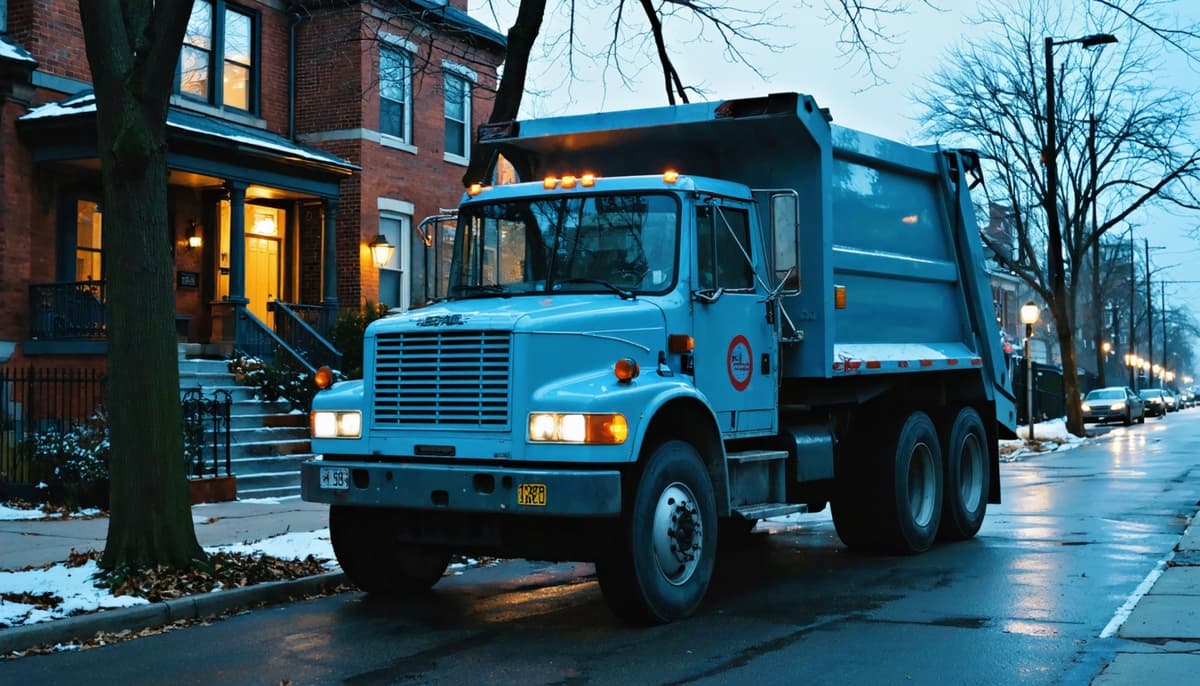
Who is liable in a Chicago garbage truck accident?
Liability in a garbage truck crash can fall on the driver, the waste-management company, a maintenance contractor, or — when the truck is municipally owned — the City of Chicago or county entity. Because government defendants trigger much shorter notice deadlines (sometimes one year), injured victims should speak with a Chicago truck accident lawyer as soon as possible to preserve every potential claim.What notice deadlines apply when a municipal garbage truck is involved?
When the City of Chicago, Cook County, or another Illinois municipality owns the garbage truck, the Illinois Local Governmental and Governmental Employees Tort Immunity Act (745 ILCS 10) imposes a one-year statute of limitations for civil actions — half the usual two-year SOL. Some injury claims additionally require a pre-suit notice of claim within 30 days. Missing either deadline typically extinguishes the claim entirely.Why do garbage trucks produce so many pedestrian and cyclist injuries?
Garbage trucks operate on residential routes at low speeds with frequent stops, creating prolonged exposure to pedestrians, bicyclists, and parked vehicles. Blind-spot geometry on the right-rear quadrant is extreme — drivers cannot see objects at knee height within 8 feet of the truck. Reverse movements at stop points are responsible for a disproportionate share of pedestrian fatalities in waste- management operations.What private waste carriers operate in Chicago?
Waste Management, Republic Services, LakeShore Recycling Systems, and Groot Industries operate the bulk of commercial garbage hauling in Chicago. Each is a national or regional carrier with seven- or eight-figure commercial-auto coverage plus excess layers. Municipal routes are run by the City of Chicago Department of Streets and Sanitation — with the narrower Tort Immunity Act exposure explained above.Why Garbage Truck Crashes Are Different
A fully loaded refuse truck can weigh more than 50,000 pounds — more than ten times the weight of the average passenger vehicle. That weight, combined with the stop-and-start nature of a residential route, makes even low-speed crashes catastrophic for anyone in a smaller vehicle, on a bike, or on foot.
Garbage trucks also have massive blind spots: directly in front of the cab, along both sides, and behind the compactor. Operators rely on mirrors, backup cameras, and spotters — but early-morning pickup schedules and driver fatigue mean those safeguards regularly fail.
Common Causes of Garbage Truck Accidents in Chicago
- Blind-spot collisions with pedestrians, cyclists, and smaller vehicles — especially during backing maneuvers.
- Driver fatigue from early-morning pre-dawn start times.
- Distracted driving — route apps, dispatch systems, and radios.
- Improper maintenance — worn brakes, failing hydraulics, compromised tires under enormous weight.
- Inadequate driver training on urban residential routes with parked cars, children, and narrow lanes.
- Overloaded vehicles that exceed weight ratings and compromise stopping distance.
Who Can Be Held Responsible
Most garbage truck cases involve multiple defendants. The driver bears direct responsibility for negligent operation. The waste-management company — Waste Management, Republic Services, LakeShore Recycling Systems (LRS), or a smaller private hauler — can be held liable for negligent hiring, training, supervision, or maintenance. When a municipal truck is involved, the City of Chicago (the Cook County venue opens up here) or a suburban public works department is a potential defendant. Contractors responsible for vehicle service and parts manufacturers are also on our investigative list in every serious case.
Compensation Available
Illinois allows recovery for past and future medical expenses, lost wages and loss of earning capacity, pain and suffering, disability, disfigurement, and — in fatal cases — wrongful death damages including loss of support and companionship. The size of a garbage truck claim often turns on the insurance available: private haulers typically carry $1 million to $5 million in commercial liability, while municipal coverage is subject to the Illinois Local Governmental and Governmental Employees Tort Immunity Act.
Notice Deadlines for Municipal Garbage Trucks
If the truck that hit you was owned by the City of Chicago or a suburban municipality, the window to file a formal notice of claim is dramatically shorter than the general two-year statute of limitations. Missing this notice can bar your case entirely — which is why calling an attorney the same week is critical.
How We Build Your Case
We act fast: we send spoliation letters to preserve dashcam footage, ECM (engine-control-module) data, route logs, maintenance records, and driver qualification files before they can be lost or overwritten. We work with accident-reconstruction experts, commercial trucking safety specialists, and medical experts to connect the crash to the full extent of your injuries.
We also handle every piece of the insurance fight — from recorded statements and medical authorizations to policy-limit demands — so you can focus on recovering.
Frequently Asked Questions
Questions we hear most often from clients injured in garbage truck crashes across Chicago and the suburbs.
Liability can fall on the driver, the waste-management company, a vehicle-maintenance contractor, a cargo-loading crew, or, when the truck is municipally operated, a City of Chicago or county entity. We investigate all possibilities to identify every source of coverage.
Commercial refuse trucks have enormous blind spots on both sides and directly behind. Combined with frequent stops, reverse maneuvers, and tight residential streets, these blind spots produce a disproportionate share of pedestrian and cyclist fatalities involving garbage trucks.
If the garbage truck is owned or operated by a governmental entity, notice deadlines are far shorter than the standard two-year Illinois personal injury statute — sometimes as short as one year. Contact a lawyer immediately to preserve your rights.
Past and future medical expenses, lost wages and loss of earning capacity, pain and suffering, disability and disfigurement, and — in cases involving the death of a family member — loss of support, companionship, and consortium through an Illinois wrongful death claim.
Both must follow federal commercial vehicle regulations (FMCSA) plus Illinois motor carrier rules. Private carriers typically carry significantly higher commercial-liability policies, which can be the difference between a capped municipal recovery and a full-value award.
Keep exploring the library.
Get your free case evaluation today
Were you or a loved one injured in a crash involving a commercial truck in the Chicago area? Get a free, confidential case evaluation.

Find Us
Chicago Truck Accident Lawyers1132 S Wabash Ave, Suite 303
Chicago, IL 60605-2305
Call 24/7312.728.2989
Get Directions